The question is motion sickness preventable comes up often before a Gulf fishing trip, especially from first-time offshore anglers. The honest answer is that it can often be reduced dramatically, but no captain or remedy can promise that every person will feel perfect in every sea condition. A little preparation, the right place on the boat, and a smart response at the first sign of discomfort can make the difference between sitting out the action and landing the fish of the day.
Is Motion Sickness Preventable Before You Leave the Dock?
Motion sickness happens when your inner ear, eyes, and body receive conflicting messages about movement. Below deck, for example, your body feels the boat rise and roll while your eyes may be fixed on a still cabin wall. Offshore conditions, sleep, anxiety, dehydration, and an empty or overly full stomach can all make that mismatch harder to handle.
The best prevention starts the evening before your trip. Get a solid night’s sleep, drink water, and go easy on alcohol. A late night followed by a greasy breakfast and a bumpy boat ride is a rough combination, even for people who normally have a strong stomach.
Eat a light, familiar meal before departure. Think toast, fruit, eggs, oatmeal, or another simple breakfast that gives you energy without weighing you down. Skipping food entirely is usually not the answer. Low blood sugar can leave you weak, shaky, and more likely to feel unwell once the boat gets moving.
If you know you are prone to motion sickness, plan ahead rather than waiting until you feel bad. Many over-the-counter options work best when taken before travel, not after nausea begins. Read the label carefully and speak with a pharmacist or medical professional if you have health conditions, take prescription medications, are pregnant, or are planning for a child. Some medicines cause drowsiness, dry mouth, or blurred vision, which may affect your comfort and safety around the boat.
Choose Your Spot and Keep Your Eyes Outside
Where you spend time on the boat matters. The smoothest area is generally lower and closer to the center of the vessel, where there is less up-and-down movement than at the bow or stern. On a larger offshore boat, that can be a meaningful comfort advantage when the Gulf has a little chop.
Fresh air helps, too. If you start feeling uneasy, stay on deck when it is safe to do so and look toward the horizon. A steady, distant visual reference helps your eyes match the motion your inner ear is feeling. It is a simple habit, but it is one of the most useful.
Try not to spend the ride down in the cabin reading, scrolling on your phone, or watching close-up video. These activities can make symptoms arrive faster. Save the fish photos, texts, and work emails for calmer moments. Your attention is better spent watching the water, talking with the crew, and getting ready for the first stop.
A shaded deck is also more than a comfort feature on a sunny Southwest Florida day. Heat and dehydration can worsen nausea quickly. Wear breathable clothing, bring sunglasses, and sip water throughout the trip. Avoid chugging a large amount at once if your stomach already feels unsettled.
Pack for Comfort, Not Just for Fishing
A good offshore day is active. You may be moving around the deck, changing positions while fishing, and handling gear with the guidance of the captain and mate. Comfortable clothing and a few well-chosen personal items help you stay focused on the experience.
Bring water, a light snack, sunscreen, a hat, and any motion sickness medication you intend to use. Ginger chews or ginger candies are a popular personal comfort measure for some guests, although they are not a substitute for medication or medical guidance. Acupressure wristbands help some people and do little for others. They are low-risk for most travelers, but it is reasonable to view them as an extra layer, not a guarantee.
Keep a small bag or container accessible if you are worried about getting sick. There is no need to feel embarrassed. Experienced charter crews have seen it all, and speaking up early allows them to help you get settled in a better location before symptoms build.
What to Do at the First Sign of Nausea
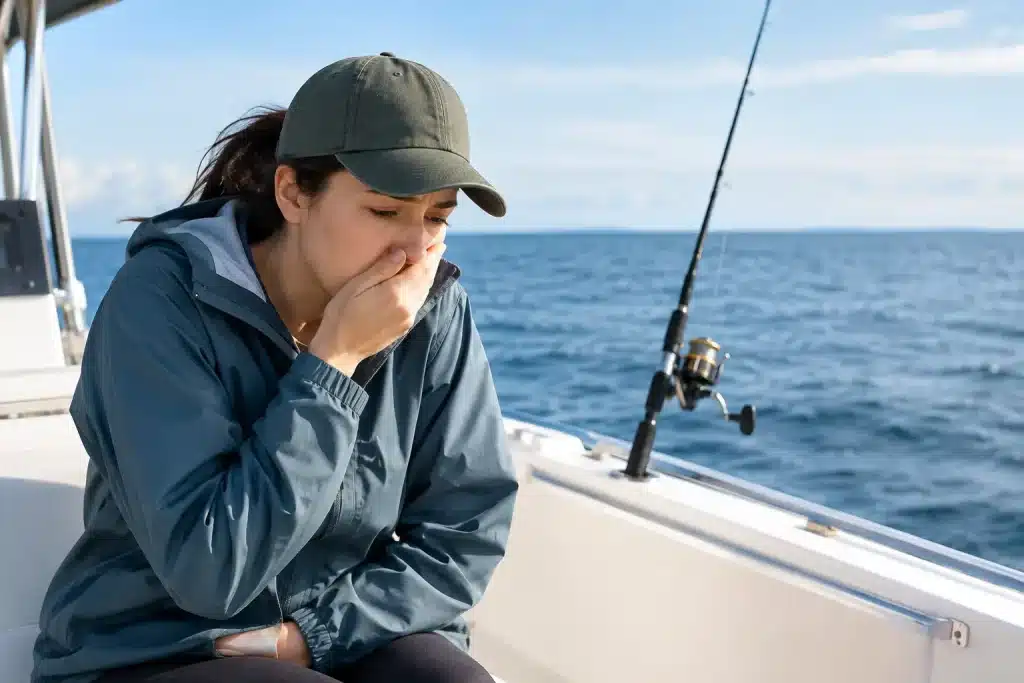
Do not try to tough it out quietly. Motion sickness is easier to manage when you act early. If you notice yawning, sweating, dizziness, a headache, increased saliva, or a vague uneasy feeling in your stomach, step away from anything close-up and get your eyes on the horizon.
Stand or sit in a stable spot near the center of the boat, breathe slowly, and get fresh air. Take small sips of water. Ask the crew where they recommend you sit or stand based on the boat’s current movement and the conditions. On a professionally run charter, the crew’s goal is to keep everyone comfortable, safe, and in the game.
Avoid lying down below deck unless the crew directs you there or you need to rest safely. The cabin is a welcome refuge from rain, sun, or fatigue, but it can feel more confining when you are actively nauseated. Most people do better outside with a clear view of the water.
It is also worth remembering that a rough start does not automatically mean a lost day. Boat motion can change after reaching the fishing grounds, changing direction, or slowing down to fish. Plenty of anglers feel uneasy during the run offshore, then settle in once the lines are down and the bite begins.
How the Right Charter Setup Can Help
No vessel can erase the natural motion of the ocean, but boat size, layout, and crew experience influence how comfortable the day feels. A spacious platform gives guests room to spread out, find fresh air, and avoid crowding around a single spot. A private restroom and full cabin are practical comforts for families and groups spending several hours offshore.
For Naples and Marco Island anglers, A&B Charters operates a custom 40-foot sportfisherman built for offshore trips, with shaded deck space and room for groups up to 14 passengers. That does not make motion sickness impossible, particularly on windy days, but it gives guests a more stable, comfortable setting than many small boats can provide.
When booking, be honest about your group’s experience level. Let the charter team know if you have first-time boaters, young children, or someone who has gotten motion sick before. The captain can offer practical expectations based on the season, forecast, trip length, and the type of outing you have planned.
Motion Sickness Prevention for Kids and First-Time Anglers
Children and first-time offshore anglers often do best when they know what to expect. Explain that the boat will move, that they should tell an adult right away if their stomach feels strange, and that looking at the horizon is part of the plan. Anxiety can amplify discomfort, while a calm, matter-of-fact approach helps everyone settle in.
Make sure children eat lightly, drink water, and wear sun protection. Keep screens put away during the ride. If a parent is considering medication for a child, that conversation should happen with the child’s pediatrician or pharmacist well before trip day. Adult products and doses are not automatically appropriate for younger passengers.
For every beginner, the best approach is to arrive rested, listen to the crew, and stay engaged. Watching a mate rig baits, seeing a dolphin surface nearby, or getting ready for a snapper strike gives the mind something far better to focus on than the boat’s motion.
Know When to Reschedule or Sit This One Out
Some situations call for extra caution. If someone has severe vomiting, dehydration, a migraine, an inner-ear condition, or a medical issue that affects balance, get medical advice before going offshore. If the marine forecast calls for conditions beyond what your group is comfortable handling, ask questions before departure. A good fishing trip should feel exciting, not like an endurance test.
Weather is part of offshore fishing, and conditions can change. The captain makes operational decisions with safety first, using experience and current conditions to determine what makes sense for the trip. Flexibility is part of planning a great day on the Gulf.
The goal is not to spend your charter worrying about whether you might get sick. Prepare the night before, choose a smart spot on the boat, stay hydrated, and tell the crew early if you feel off. Then keep your eyes on the horizon, your hands ready for the next rod, and your attention where it belongs: on the water and the fish that may be about to bite.
Discover more from Naples Fishing Charters | Deep Sea Fishing
Subscribe to get the latest posts sent to your email.