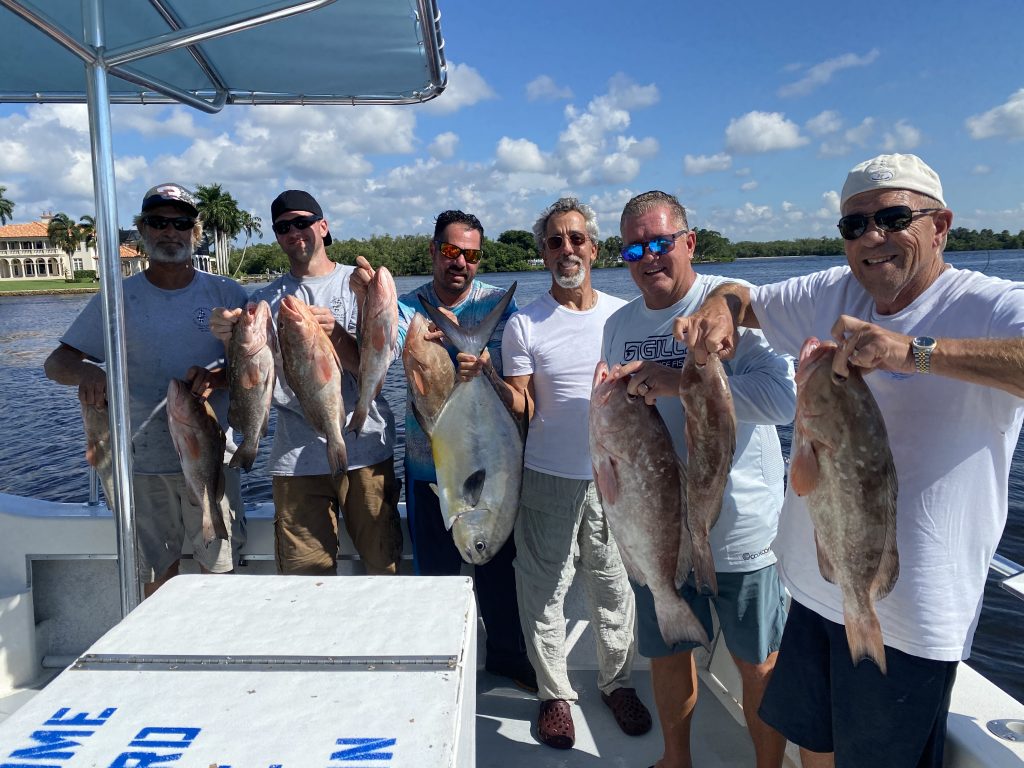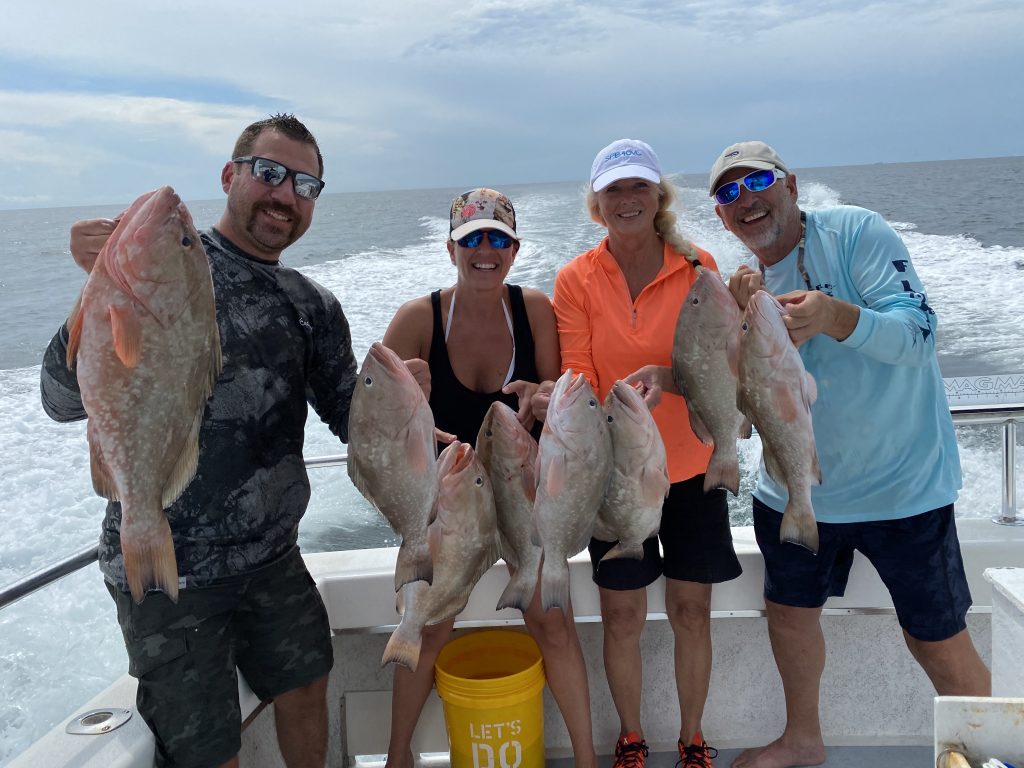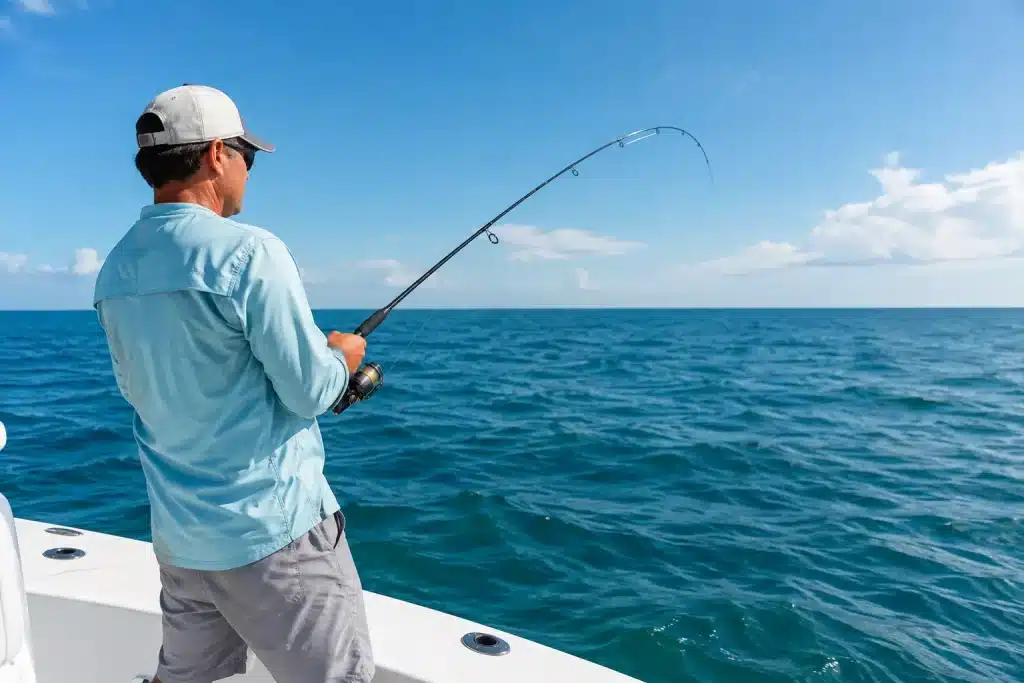
The first clue that you have reached productive deeper water is rarely a dramatic change on the surface. It is usually a number on the depth finder, a hard edge on the bottom, a rise in bait activity, or the captain recognizing a piece of Gulf structure that holds fish year after year. Learning how to fish deeper water means learning to read those clues, then presenting a bait where bottom fish and roaming predators expect to find it.
Off Naples and Marco Island, fishing deeper water can put anglers over reefs, ledges, wrecks, hard bottom, and artificial structure where grouper, snapper, amberjack, kingfish, permit, and other sought-after Gulf species feed. The right approach changes with the depth, current, season, and species, but the fundamentals remain the same: find fish-holding structure, get your bait to the strike zone, and stay connected to the bottom without sacrificing a natural presentation.
How to Fish Deeper Water Starts With Structure
Fish do not spread evenly across the Gulf floor. In deeper water, they gather where the bottom gives them a reason to stay. A small ledge can create shade and current breaks. A patch of hard bottom can hold baitfish and crustaceans. Wrecks and artificial reefs offer cover, vertical relief, and an easy place for predators to ambush a meal.
That is why a good fish finder and local knowledge matter so much. The screen helps reveal bottom contour, bait clouds, and fish marks, but it does not replace experience. A captain who has spent years fishing the Naples area understands which bottom areas tend to produce in different seasons and how wind and current affect a particular spot.
When the boat arrives over structure, pay attention to what the crew is doing. They may make several passes before dropping lines, watching how the boat drifts and where the best marks appear. That setup time is not wasted. A bait dropped 30 yards off a reef can be far less effective than one placed right along its edge.
Depth Is Relative, Not Just a Number
For one trip, deeper water may mean moving from 40 feet to 90 feet. On another, it may mean heading much farther offshore to fish several hundred feet down. The best depth depends on the target species, water temperature, bait availability, and time of year.
Grouper and snapper are commonly tied to bottom structure, although their preferred depths vary by species and season. Amberjack may hold around a wreck or high-relief structure, often off the bottom. Kingfish frequently patrol areas with bait and current rather than sitting on the seafloor. The goal is not simply to go as deep as possible. It is to fish the depth where the species you want is actively feeding.
Use Enough Weight to Reach the Strike Zone
A common mistake in deeper water is fishing too light. If your bait never reaches the bottom, or it swings far behind the boat in the current, you are fishing a different zone than you intended. The right sinker keeps the bait under control and gets it down quickly.
There is no single perfect weight. On a calm day with minimal current, a lighter sinker may be enough and can make the bait move more naturally. Add wind, current, or greater depth, and you may need considerably more weight. The crew will usually adjust the rig until it reaches bottom efficiently without creating an awkward, heavy presentation.
Once the bait hits bottom, do not leave a large bow in the line. Reel up just enough to stay in contact with the sinker or bottom. That contact helps you feel the difference between a nibble, a bait-stealing grunt, and the solid pull of a quality fish. It also allows you to react quickly before a grouper reaches a hole or a snapper drops back into the structure.
Match Your Rig to the Fish and Bottom
Deep-water tackle needs enough strength to handle the fish, the depth, and the rough structure below. Heavy leader may be needed around sharp reefs, wrecks, and large grouper, while a more refined setup can help when wary snapper are the target. The trade-off is straightforward: heavier gear gives you more control, but lighter, cleaner presentations can earn more bites in clear water or on pressured fish.
Circle hooks are a dependable choice for many bottom-fishing situations. Instead of setting the hook with a hard jerk, steadily reel as the fish pulls and let the hook find the corner of the mouth. This is especially helpful for first-time anglers, but the crew will explain the approach that fits the day’s rig and target species.
Fresh, properly sized bait matters too. A lively baitfish can trigger aggressive strikes from larger predators, while cut bait or squid may be effective for snapper and other bottom feeders. The best bait is not always the biggest or most expensive option. It is the bait that looks natural, stays on the hook, and matches what fish are feeding on around that structure.
Control the Boat, Then Control the Drift
In deeper water, boat position can be as important as the bait itself. Wind and current can push a boat across structure in seconds. If the drift is too fast, baits may drag past the target zone. If the boat is positioned poorly, every line can angle away from the reef before it has a chance to produce.
A skilled captain may choose to drift, anchor, or use a combination of approaches based on conditions. Drifting covers more ground and can be productive when fish are scattered along a ledge. Anchoring or carefully holding position keeps baits in a concentrated area when a specific wreck, rock pile, or reef is holding fish. Neither approach is automatically better. The conditions and fish behavior make the call.
For anglers, the practical part is simple: follow the crew’s instructions on when to drop, when to reel up, and where to keep your line. If the captain says the boat is moving off the mark, retrieve promptly. A quick reset often puts everyone back over the fish before the bite slows down.
Watch Your Line More Than Your Rod Tip
Deep-water bites do not always look like a rod doubling over. In fact, some of the most valuable bites begin as a small tap, a slight slackening of line, or a steady extra weight as you lift the rod. Keep a finger near the line when appropriate, stay alert, and avoid getting distracted after your bait reaches bottom.
When a fish bites near structure, the first few seconds matter. Reel steadily and apply firm pressure. Do not give a strong fish enough slack to turn its head toward the reef. At the same time, avoid trying to horse every fish to the surface. Larger species make powerful runs, and smooth pressure lets the rod and drag do their job.
If you are unsure whether you are feeling a fish, ask the mate. That is part of a guided offshore trip. A good mate can tell you whether you are on bottom, tangled with another line, dragging through current, or about to connect with something worth fighting.
Be Ready for the Change at Mid-Depth
Not every fish comes from the bottom. While bottom rigs work near reefs and wrecks, many offshore opportunities happen above the structure. A school of bait may show halfway down. Amberjack may suspend above a wreck. Kingfish can attack a bait running high in the water column.
This is why a productive day offshore often involves more than one technique. One angler may be working a bait on the bottom for grouper or snapper while another has a bait positioned higher for a cruising predator. Staying flexible gives your group more chances at action and lets the crew respond when the fish show themselves on the electronics.
It also pays to keep a clean deck and listen for changes in direction. When the crew calls for a different rig or asks everyone to bring lines in, they may have spotted birds, bait, or a new mark that is worth working immediately.
Let Local Experience Shorten the Learning Curve
You can study charts, buy quality tackle, and learn a great deal through time on the water. But offshore fishing involves changing weather, currents, regulations, and conditions that are hard to predict from shore. For visitors and first-time deep sea anglers, a professionally guided trip removes the guesswork of navigation, boat handling, tackle setup, and finding productive water.
A&B Charters has been taking anglers offshore from Southwest Florida since 1977, with a captain and mate available to help every member of the group fish effectively. On a spacious 40-foot sportfisherman, guests can focus on the excitement of the bite while the crew handles the details that make deeper-water fishing safer, more comfortable, and more productive.
The next time your bait reaches the bottom and the line comes tight, resist the urge to rush. Stay calm, keep steady pressure, and let the crew coach you through the fight. That moment between the first pull and the fish breaking the surface is exactly why deeper Gulf water is worth the ride.
Discover more from Naples Fishing Charters | Deep Sea Fishing
Subscribe to get the latest posts sent to your email.