The first hard thump on the line usually answers the question better than any definition can. Still, knowing how offshore fishing works makes a first Gulf trip more comfortable and helps experienced anglers get more from their day. Off Naples and Marco Island, offshore fishing means leaving the nearshore beaches behind, running into the Gulf of Mexico, and targeting fish that gather around reefs, wrecks, ledges, and other underwater structure.
A private charter turns that process into a straightforward day on the water. The captain handles the boat, navigation, weather decisions, and finding productive areas. The mate prepares tackle, rigs baits, helps with technique, and is there when a fish reaches the boat. Your job is the enjoyable part: fish hard, stay ready, and make room in the cooler for a memorable catch.
How Offshore Fishing Works From the Dock to the Fishing Grounds
An offshore trip starts before the boat leaves the dock. The crew checks the marine forecast, sea conditions, fuel, safety gear, live bait, ice, and the plan for the day. Conditions matter because a calm morning can make a longer run comfortable, while wind and seas may call for fishing closer-in structure. Good charter fishing is not about forcing one plan. It is about making smart decisions that put guests in the best position for a safe, productive outing.
After boarding, the captain gives a quick safety briefing and explains where to stow personal items, how to move around the boat, and what to expect on the ride out. On a well-equipped sportfisherman, that ride is part of the experience. Shade on the fishing deck, a full cabin, private restroom, bunks, and modern electronics make a major difference for families, mixed-age groups, and anyone who wants more comfort than a small center-console can provide.
The run offshore can be short or substantial depending on the target species, the season, and the available fishing time. Half-day trips often focus on productive grounds within a reasonable distance of shore. Full-day charters give the captain more flexibility to travel farther, work several areas, and wait out a slower bite when the payoff may be larger fish or a wider variety of species.
Finding Fish Is Not Guesswork
The Gulf looks wide open from the surface, but fish do not roam it evenly. Most offshore game fish relate to structure, current, water temperature, bait, and food sources. Reefs, wrecks, rock piles, ledges, and artificial structures can all hold life. The captain uses local knowledge and marine electronics to locate bottom contours, identify structure, monitor depth, and see signs of bait or fish below the boat.
That is one of the biggest advantages of going with a seasoned local crew. A productive spot is not simply a coordinate on a screen. It changes with tide, current, weather, season, boat traffic, and fishing pressure. A captain who has spent years on these waters knows when to give a location time, when to change baits, and when it is time to move.
The Main Ways Anglers Fish Offshore
Bottom fishing is a favorite method off Southwest Florida because so many sought-after species hold close to the reef. The boat positions over structure, then anglers lower baited rigs to the bottom or just above it. The goal is to keep the bait in the strike zone while feeling for a bite. Snapper may tap lightly before committing. Grouper often hit with authority and immediately try to get back into cover.
When a fish bites, the mate will coach you through the moment. Sometimes that means lifting the rod firmly to set the hook. Other times, especially with a fish already hooked on a circle hook, the best move is to reel steadily and let the rod load up. The right response depends on the rig, bait, and species, which is why hands-on guidance matters.
Trolling is another offshore method, especially when targeting faster-moving fish such as kingfish. The boat pulls baits or lures at a controlled speed through likely areas, often around bait schools, edges, or structure. Rather than staring at a rod tip, trolling creates anticipation: a reel suddenly starts screaming, a rod bends deep, and somebody is in the fighting chair or at the rail with a fish on.
Some trips also call for drifting, jigging, or fishing live bait around specific structure. The captain may change techniques throughout the day. That flexibility is valuable. Fish rarely read the plan, and the best crews adjust to what the water is giving them.
What You Might Catch in the Gulf of Mexico
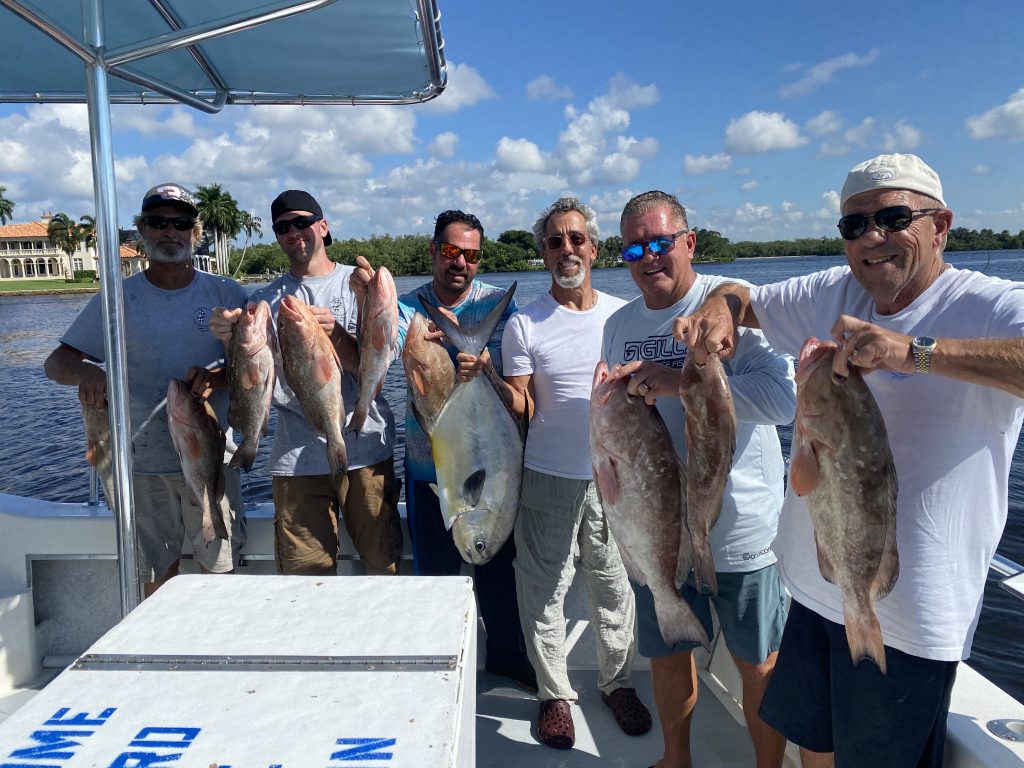
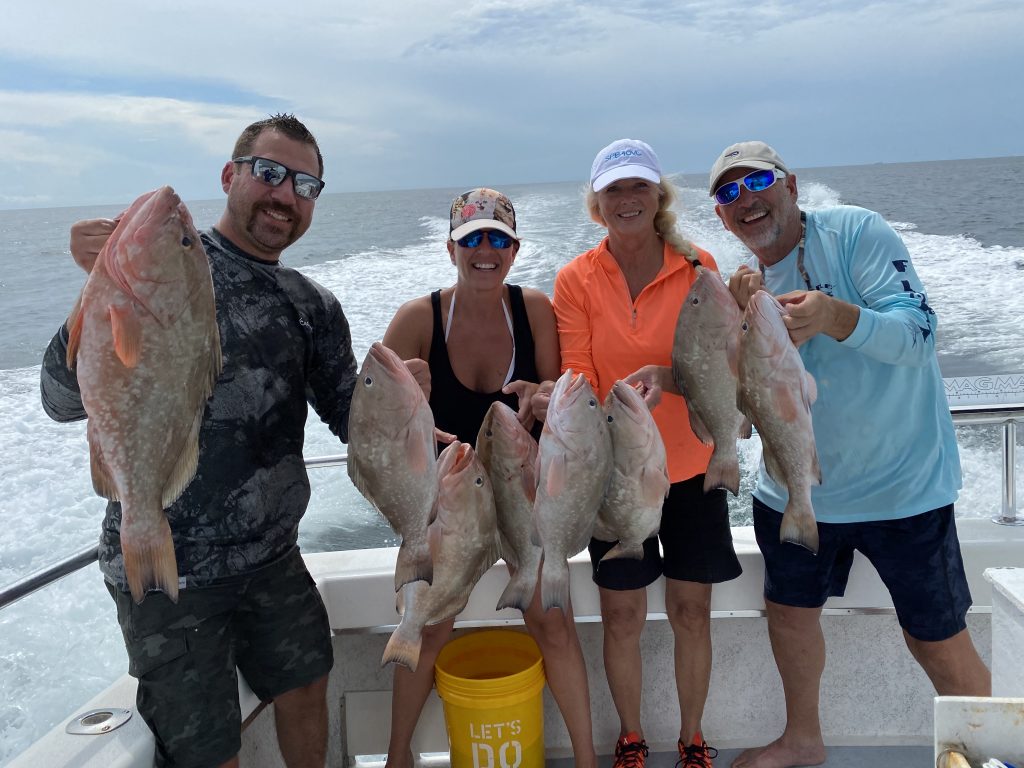
Off Naples and Marco Island, offshore charters can produce a strong variety of fish. Grouper and snapper are staples of reef fishing and are prized for both the fight and the table. Depending on the season and location, anglers may also encounter kingfish, amberjack, permit, and goliath grouper.
Each species changes the feel of the fight. A grouper is powerful and determined to reach the bottom. Amberjack can feel like dead weight that suddenly comes alive with long, stubborn runs. Kingfish are fast and aggressive. Permit are known for testing an angler’s patience and skill. Goliath grouper offer an unforgettable pull, though they are handled according to applicable rules and are often released.
No honest captain can promise a particular fish on a particular day. Weather, water conditions, seasonal patterns, and natural fish behavior all play a role. What a professional charter can provide is quality equipment, a capable boat, local knowledge, and a crew that is working constantly to improve your odds.
Keeping, Releasing, and Respecting the Catch
Not every fish goes into the cooler. Regulations set seasons, size limits, bag limits, and protected species rules, and those rules can change. Your crew keeps track of what may be retained and what needs to be released. If you land a legal keeper, the mate can handle the fish carefully and keep it iced down for the ride home.
Responsible release matters, too. Fish that are out of season, undersized, or otherwise not eligible for harvest should be returned as quickly and carefully as possible. A good charter balances the excitement of the catch with respect for the fishery that makes Gulf fishing so special.
Why the Boat and Crew Change the Day
Offshore fishing can be active, physical, and wonderfully unpredictable. The right boat gives everyone room to enjoy it. On a larger sportfisherman, anglers have space to fish without crowding one another, while non-anglers have a shaded area and cabin amenities when they want a break. That makes a real difference on family trips, friend outings, and corporate charters where not everyone has the same experience level.
Crew support is just as important. Beginners do not need to arrive knowing knots, rigs, bait selection, or offshore navigation. The mate can show you how to hold the rod, work the reel, and respond when a fish strikes. Experienced anglers benefit too, because they can spend more time fishing and less time managing the details.
A&B Charters has been taking guests offshore since 1977, and that kind of longevity reflects the basics people value most: a professionally run trip, a comfortable platform, and a crew that wants every group to have a good day on the water. With room for up to 14 passengers, a private charter can also keep the experience centered on your own group rather than sharing the boat with strangers.
How to Prepare for Your First Offshore Trip
You do not need a garage full of gear to fish offshore with a charter. Wear comfortable clothing that can get wet, use sunscreen, bring a hat and polarized sunglasses, and choose shoes with secure, non-marking soles. A light layer is useful for the early run offshore, even on a warm Florida day.
If you are prone to motion sickness, plan ahead rather than waiting until the boat is moving. Consider an appropriate remedy before departure, follow its directions, and stay hydrated. Looking toward the horizon, getting fresh air, and avoiding a heavy meal right before boarding can help. Let the crew know if it is your first time or if anyone in your group is concerned about seasickness.
Most importantly, arrive ready to participate. Offshore fishing has quiet stretches between bites, but that is part of the rhythm. Then the rod bends, the deck comes alive, and the Gulf reminds you why people keep coming back.
A good offshore trip is not measured only by the number of fish in the cooler. It is the moment a child feels a first bite, the laughter when a friend loses a battle with a hard-pulling amberjack, and the ride home with salt in the air and a story your group will tell long after the day is over.
Discover more from Naples Fishing Charters | Deep Sea Fishing
Subscribe to get the latest posts sent to your email.