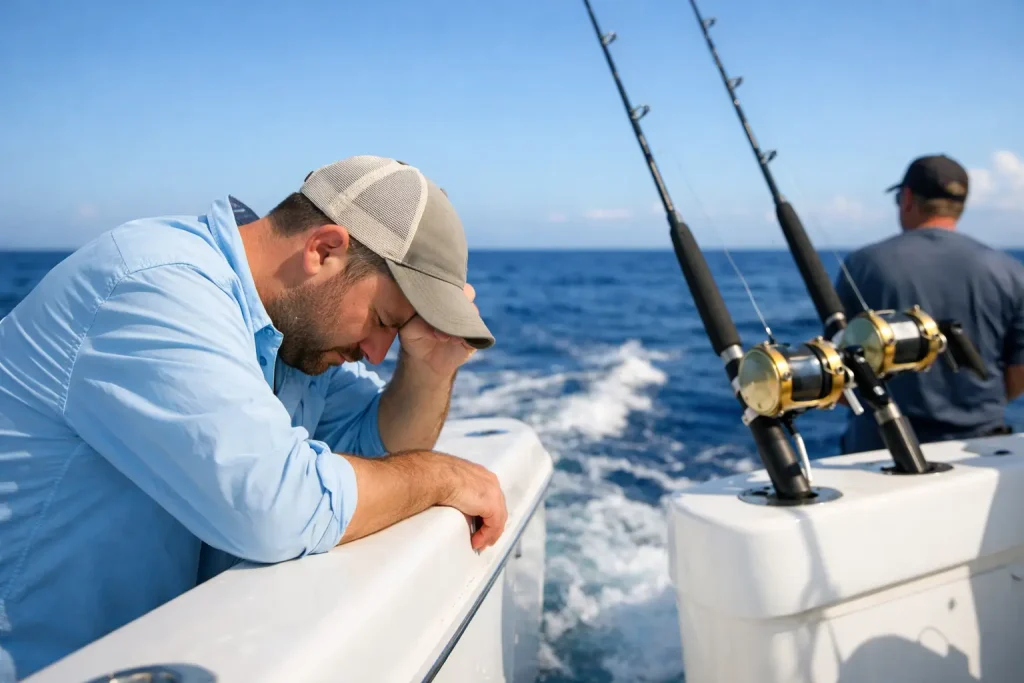
You can be excited about a deep sea trip for weeks, then start worrying the night before about one thing: getting sick before the bite even turns on. If you have ever wondered how to avoid seasickness fishing, the good news is that most people can improve their odds quite a bit with the right preparation, a few smart choices on the boat, and a charter setup that makes the day more comfortable from the start.
Seasickness does not mean you are weak, inexperienced, or not cut out for offshore fishing. It usually comes down to how your brain and body react when the motion of the boat does not match what your eyes expect. Some anglers feel fine on calm days and rough on choppy ones. Others are more sensitive in the morning, when they are tired, dehydrated, or running on coffee alone. The key is not pretending it will never happen. The key is planning for it before the lines go in.
How to Avoid Seasickness Fishing Before the Trip
The best time to deal with seasickness is before you ever leave the dock. Waiting until you already feel bad offshore usually means you are playing catch-up.
Start with sleep. A poor night of rest can make you more sensitive to motion, nausea, and heat. If you are heading out early, try to get to bed on time instead of treating the night before like part of the vacation. Fatigue and a rocking boat are not a great combination.
Food matters too, but this is where people often get it wrong. Going out on an empty stomach can make nausea worse, especially if you add sun, heat, and diesel smells. A light, balanced meal is usually the better move. Think toast, fruit, eggs, or something simple that will sit well. Heavy greasy food can backfire, but no breakfast at all is not usually the answer.
Hydration also helps more than people realize. Start drinking water before the trip, not just once you are already offshore. Dehydration can make dizziness and nausea feel stronger. At the same time, go easy on alcohol the night before. Even a mild hangover can make normal boat motion feel much worse.
If you know you are motion-sensitive, take a preventative medication before departure, not after symptoms start. That timing matters. Follow the product directions and, if you have medical questions, ask your doctor ahead of time. Different options work better for different people. Some are effective but can make you drowsy, which may not be ideal if you want to stay sharp and enjoy the full day. It depends on your tolerance, your health history, and how long you will be on the water.
Pick the Right Day and Trip Length
Not every offshore trip feels the same. Weather, wind, swell direction, and travel time all influence comfort. If you are nervous about motion sickness, a calmer forecast can make a big difference, especially for your first trip.
Trip length matters too. Some anglers do better on a shorter outing while they learn how their body handles offshore conditions. Others actually feel worse on quick runs with lots of stop-and-go movement than they do on a steady ride. There is no universal rule, but if you are booking for a family or mixed group, it helps to be honest about everyone’s comfort level instead of assuming they will tough it out.
What to Do on the Boat if You Want to Stay Comfortable
Once you are underway, your goal is to help your senses stay in sync. That means paying attention to where you sit, where you look, and how you move around the boat.
The horizon is your friend. Looking out at a fixed point in the distance helps your brain process the boat’s motion better than staring down at your phone, tackle, or the deck. If you start to feel off, put the screen away and keep your eyes up. A lot of people trigger their own nausea by trying to text, scroll, or tie rigs while the boat is rolling.
Fresh air helps as well. Being outside in the breeze is often better than sitting in a stuffy space once symptoms start building. Strong smells can make things worse, whether that is fuel, sunscreen, food, or even a cooler lid opening at the wrong time. If you know certain odors bother you, minimize them.
Where you position yourself can matter. On many boats, the center area tends to feel more stable than the far bow or stern, where motion can be more pronounced. You do not need to overthink every step, but if you are feeling queasy, choosing a steadier spot can help settle things down.
Small Habits That Make a Big Difference
One of the most effective habits is staying ahead of the problem. The moment you feel warm, uneasy, or unusually tired, respond to it. Sip some water. Get your eyes on the horizon. Take a break from rigging or looking down. Do not wait until you are fully nauseated.
Snacking lightly can help some anglers. Crackers, plain chips, or other simple foods are often easier to tolerate than sugary or greasy snacks. Big meals offshore can feel fine for one person and terrible for another, so this is one of those areas where it depends on your body. Keep it simple until you know what works for you.
Avoiding too much caffeine can also help. For some people, one cup of coffee is fine. For others, coffee on an empty stomach plus ocean motion is a recipe for trouble. If you are already prone to nausea, this may not be the day to push your normal routine.
If You Start Feeling Sick, Act Early
The biggest mistake anglers make is trying to hide it. They stay quiet, hope it passes, and keep pushing until they are miserable. The better move is to say something early and take a few practical steps right away.
Sit down in a stable spot, get some air, and look at the horizon. Take slow breaths. Drink a little water. If you brought approved medication or remedies, use them according to the directions. Sometimes a short reset is enough to keep a mild case from becoming a rough few hours.
It also helps to stop fighting the boat. Tension can make everything worse. If you are clenching, rushing, and telling yourself not to get sick, you often feel more uncomfortable. Relaxing your body and breathing steadily can take the edge off.
For first-timers, this is where a well-run charter can really change the day. An experienced crew has seen it all and knows that one person feeling queasy does not mean the trip is ruined. Comfort, shade, room to move, and a calm, capable crew all matter when someone needs a minute to recover.
Boat Comfort Plays a Bigger Role Than People Think
If you are researching how to avoid seasickness fishing, focus on your own preparation first, but do not ignore the boat itself. Smaller boats can fish hard and catch plenty, but they often feel more every time the water gets sloppy. A larger, more stable offshore platform with room to sit comfortably, get out of the sun, and regroup can make a real difference for families, beginners, and anyone who is not used to Gulf conditions.
That is one reason many guests feel more at ease on a spacious sportfishing boat with a shaded deck, full cabin, and private restroom. Comfort is not just a luxury item offshore. It affects how long you stay relaxed, hydrated, and ready to fish. At A&B Charters, that comfort is part of the trip design, especially for groups with mixed experience levels.
The crew matters just as much as the layout. A captain who knows the local waters, reads conditions well, and runs a professional operation can often make the ride smoother and the day less stressful. That does not mean anyone can promise a perfectly flat Gulf every time. It means the right charter gives you better odds of a comfortable, enjoyable experience when conditions allow.
A Realistic Mindset Helps Too
Here is the honest part: there is no foolproof way to guarantee you will never feel seasick. Weather changes. Bodies react differently. A remedy that works for your friend may do nothing for you. But most anglers have more control than they think.
If you sleep well, eat light, hydrate, choose your medication carefully if needed, keep your eyes on the horizon, and speak up early if you feel off, you give yourself a strong chance to stay in the game. And if you do feel a little green for part of the trip, that does not automatically mean the whole day is shot. Plenty of people settle in, recover, and end up catching fish they talk about long after the vacation ends.
Offshore fishing should feel exciting, not intimidating. A little preparation goes a long way, and the right boat, crew, and game plan can turn a worry into just another part of getting ready for a great day on the Gulf.
Discover more from Naples Fishing Charters | Deep Sea Fishing
Subscribe to get the latest posts sent to your email.