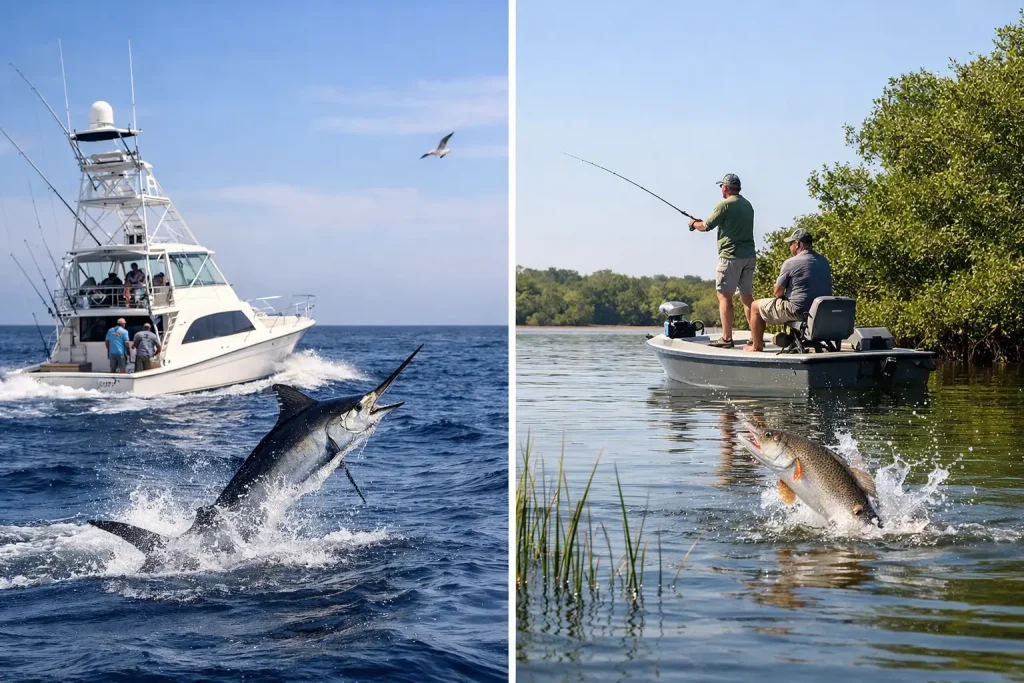
A great day on the water starts with choosing the kind of fishing day you actually want. The offshore charter vs inshore question is not about one trip being better than the other. It is about distance, target species, boat comfort, weather, and whether your group wants fast action close to shore or a true Gulf fishing adventure.
For visitors and local anglers around Naples and Marco Island, both options can create a memorable outing. The right choice comes down to what you hope is waiting at the end of your line.
Offshore Charter vs Inshore: The Main Difference
Inshore fishing takes place in protected or nearshore waters, often around bays, backcountry channels, mangroves, passes, and shallow flats. These trips usually involve less running time and focus on fish that live close to land.
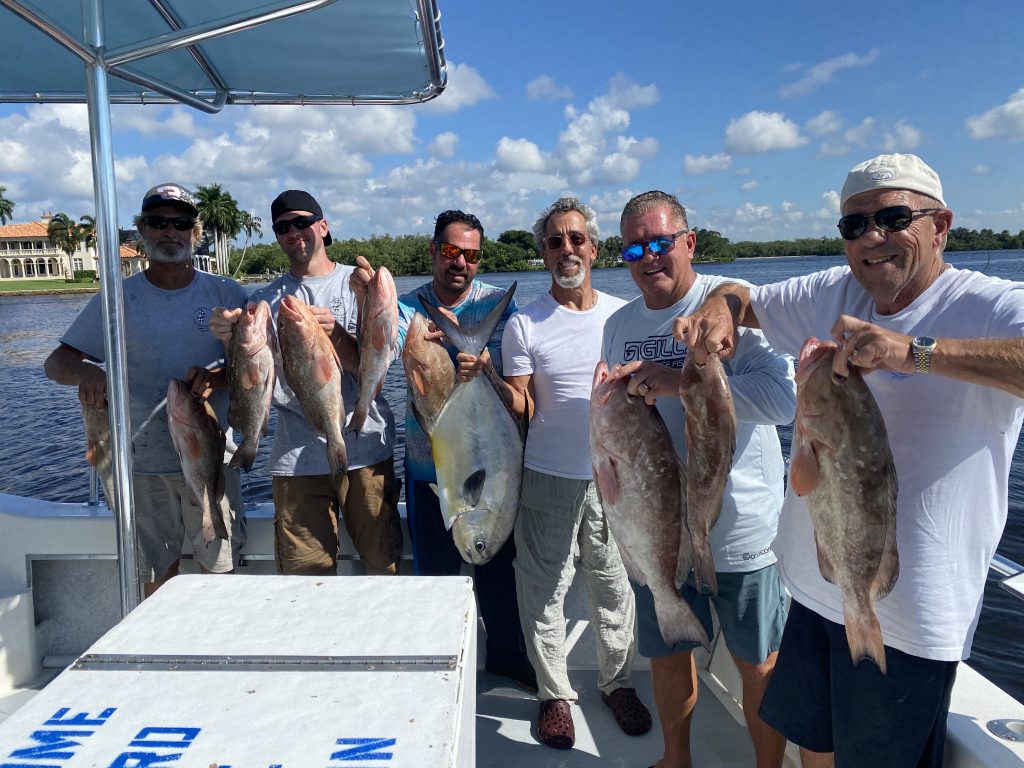
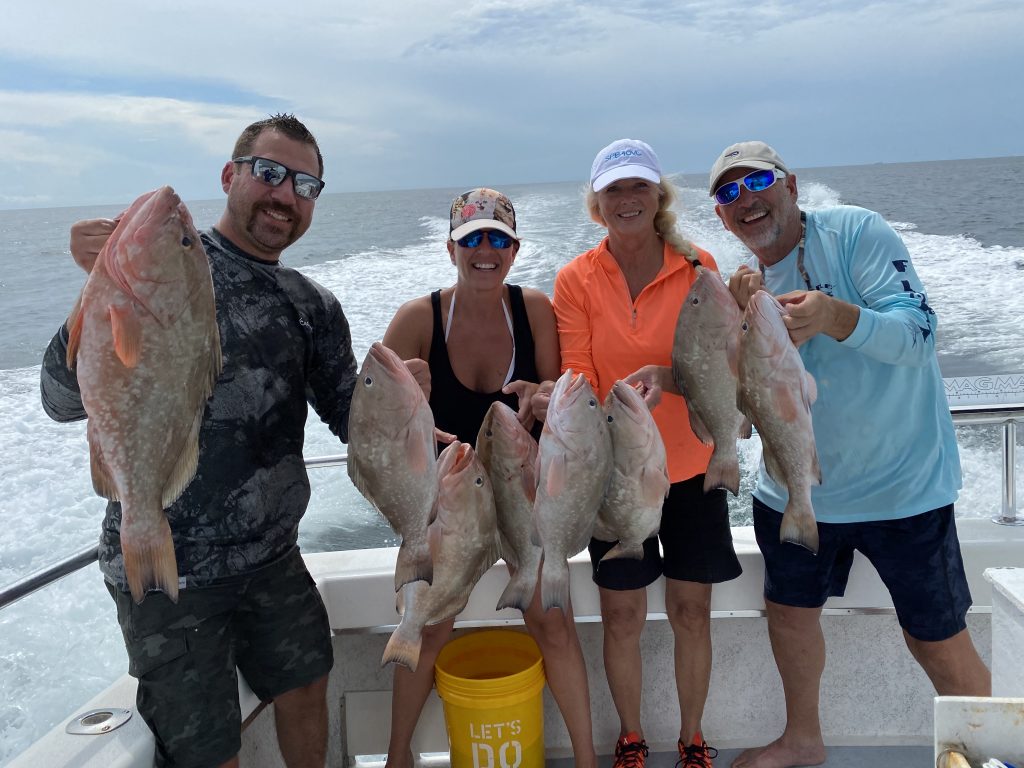
Offshore fishing heads into the Gulf of Mexico, where the boat runs farther from the coast to reach reefs, wrecks, ledges, and deeper bottom structure. This is where anglers pursue many of Southwest Florida’s classic deep sea targets, including grouper, snapper, kingfish, amberjack, permit, and, when conditions and regulations allow, goliath grouper.
That difference in location changes nearly every part of the day. Inshore trips are often lighter, quicker, and more protected. Offshore trips offer the bigger-boat, open-water experience and the chance to battle larger, hard-fighting fish over deeper water.
What an Inshore Fishing Trip Feels Like
An inshore charter is often a strong fit for anglers who want to stay closer to shore. The ride is generally shorter, the water may be calmer, and the fishing can begin relatively quickly. On a typical Southwest Florida inshore outing, you may fish around mangrove shorelines, bridges, grass flats, oyster bars, or passes where fish feed with the moving tide.
Depending on the season, common inshore targets may include snook, redfish, trout, tarpon, sheepshead, and mangrove snapper. These fish can provide plenty of action, especially for anglers who enjoy casting, working live bait, and fishing with a close view of the coastline.
Inshore fishing is a practical option for young children, guests nervous about a long boat ride, or travelers with limited time. It can also be a smart choice when wind conditions make the open Gulf less comfortable. Still, calmer water does not mean automatic fish, and shallow-water fishing often relies heavily on tides, water clarity, and precise presentation.
What an Offshore Charter Feels Like
An offshore trip is built around the experience many visitors picture when they think of deep sea fishing in Naples or Marco Island. You leave the coastline behind, settle into the ride, and run toward productive Gulf structure where larger reef and pelagic species hold.
Once you arrive, the fishing may involve dropping baits to the bottom for grouper and snapper, working live bait around wrecks for amberjack, or trolling for kingfish and other active predators. The crew handles the navigation, rigging, bait preparation, and fish-finding work, so beginners can focus on learning the technique and feeling the bite.
Offshore fishing requires more travel time, especially on a full-day trip designed to reach farther grounds. That travel is part of the trade-off. Deeper water and more substantial structure can produce a wider range of quality fish and a more physical fight. There is nothing quite like watching a rod bend over the rail, then working a fish up from the Gulf floor while the whole group waits to see what appears.
Catch Potential: Quality, Variety, and Expectations
Many guests choose offshore fishing because they want the opportunity for larger fish and fish that may be brought home for the table. Grouper and snapper are perennial favorites for good reason, but availability depends on seasons, regulations, water conditions, and the day’s bite. A professional captain cannot promise a particular species or a full cooler, but local experience greatly improves the odds of putting your group where fish are feeding.
Inshore fishing can be equally exciting, but its rewards are different. A redfish charging a bait along a mangrove edge or a snook striking near a pass is a memorable moment. The fishing is often more visual and can involve more casting. Offshore fishing tends to suit guests who want a deeper-water variety of techniques, stronger tackle, and the possibility of heavier fish.
It also helps to set the right expectation before booking. A half-day offshore trip can deliver excellent action when nearby spots are producing, while a full day gives the captain more time and range to explore productive grounds. If your group is focused on bottom fish, a longer trip may make more sense than trying to squeeze an offshore experience into a tight schedule.
Boat Comfort Matters More Offshore
The farther you travel, the more the boat itself affects the day. A small center console can be effective for short runs and shallow water, but an offshore charter should give your group room to fish, relax, and get out of the weather when needed.
For families, larger friend groups, and corporate outings, look for a vessel with a shaded deck, a private restroom, a cabin, modern navigation electronics, and proper safety equipment. These are not luxury extras when you are spending several hours in the Gulf. They make the ride more comfortable, give non-anglers a place to take a break, and help everyone stay focused on enjoying the experience.
A&B Charters runs offshore trips aboard a custom 40-foot sportfisherman with room for groups of up to 14 passengers. That extra space is especially valuable when several people are fishing at once, children need shade, or guests want to move around without feeling crowded.
Which Trip Is Better for Families and Beginners?
There is no single answer. For a family with very young children, a short inshore trip may be the easiest introduction because the ride is shorter and the shoreline stays nearby. For older kids, teens, and adults who are excited about catching substantial fish, an offshore trip can become the highlight of a Florida vacation.
First-time anglers often do very well offshore when they have a patient captain and first mate. You do not need to own tackle, know how to tie knots, or understand Gulf navigation. The crew can show you how to hold the rod, drop a bait, feel for a bite, and fight a fish without rushing the moment.
If anyone in the group is concerned about motion sickness, plan ahead. Eat lightly, stay hydrated, consider an appropriate over-the-counter remedy before departure, and spend time in fresh air looking toward the horizon. Conditions vary daily, so be honest with the captain about your group’s comfort level when discussing trip options.
How Weather Changes the Decision
Weather can make the offshore charter vs inshore decision for you. The Gulf is often calm and inviting, particularly during favorable seasonal patterns, but wind and wave conditions can change. A seasoned captain evaluates the forecast, the boat, the planned route, and the experience level of the group before heading out.
When offshore conditions are comfortable, the open Gulf offers an outstanding setting for a full fishing day. When it is rougher, staying closer to shore may be the wiser call. Choosing the safer, more comfortable plan is not settling for less. It is how experienced charter operators protect the fun of the day and get guests back to the dock with good memories.
Choose the Day You Want to Remember
Choose inshore fishing if your priority is a shorter ride, protected water, lighter tackle, or close-to-coast action. Choose offshore if your group wants a deep sea experience, roomier boat comfort, Gulf species, and the chance to fish reefs and wrecks well beyond the beach.
The best charter is the one that fits your people, your schedule, and your idea of a great day on the water. Bring a sense of adventure, listen to the crew, and be ready when the rod bends. That next fish could be the story your group talks about long after the vacation ends.
Discover more from Naples Fishing Charters | Deep Sea Fishing
Subscribe to get the latest posts sent to your email.